The First Sixty Minutes After a Pipe Bursts
The single most valuable action you can take is shutting off the water at the main valve, which in most Cloverdale homes sits on the wall facing the street, usually in the basement, a utility closet, or near the water heater. Turn it clockwise until it stops. If the burst is on a hot-water line, also kill power to the water heater at the breaker so the tank does not run dry and damage the heating element. Once the supply is off, open the lowest faucet in the house to drain the remaining water out of the pipes, which keeps gravity from feeding the leak for another twenty minutes after you think you have stopped it. If you cannot locate the main valve quickly, the curb stop at the property line can be shut by the water utility, though response time on a Sunday morning in January is not something you want to gamble on, so finding and labeling that valve before winter arrives is one of the smartest fifteen minutes a homeowner can spend.
From there, your job shifts to documentation and triage. Take pictures and short videos of every wet surface before you move anything, because your insurance adjuster will eventually ask for that visual proof, and a phone full of timestamps does far more for your claim than a written list. Move electronics, photo albums, area rugs, and anything wood-based off the wet floor. If water has reached an outlet or a light fixture, flip the breaker for that zone before you walk through standing water. Most homeowners underestimate how quickly water travels along floor joists, which is why a burst pipe upstairs almost always shows up as a stained ceiling on the floor below within an hour or two. Pulling back wet carpet from the tack strip and lifting the pad off the slab or subfloor buys you significant drying time, since pad acts like a sponge that holds water against the structure for days if left in place.
Call a restoration company before you call your insurance carrier. That order matters. A reputable contractor will give you an honest assessment of whether the damage is something you should even file on, since claims under the deductible can raise your premium without ever paying out. You can read more about the full process in our breakdown of burst pipe water damage immediate steps and repair cost, which covers the documentation language adjusters actually want to see.
What Professional Frozen Pipe Repair Looks Like
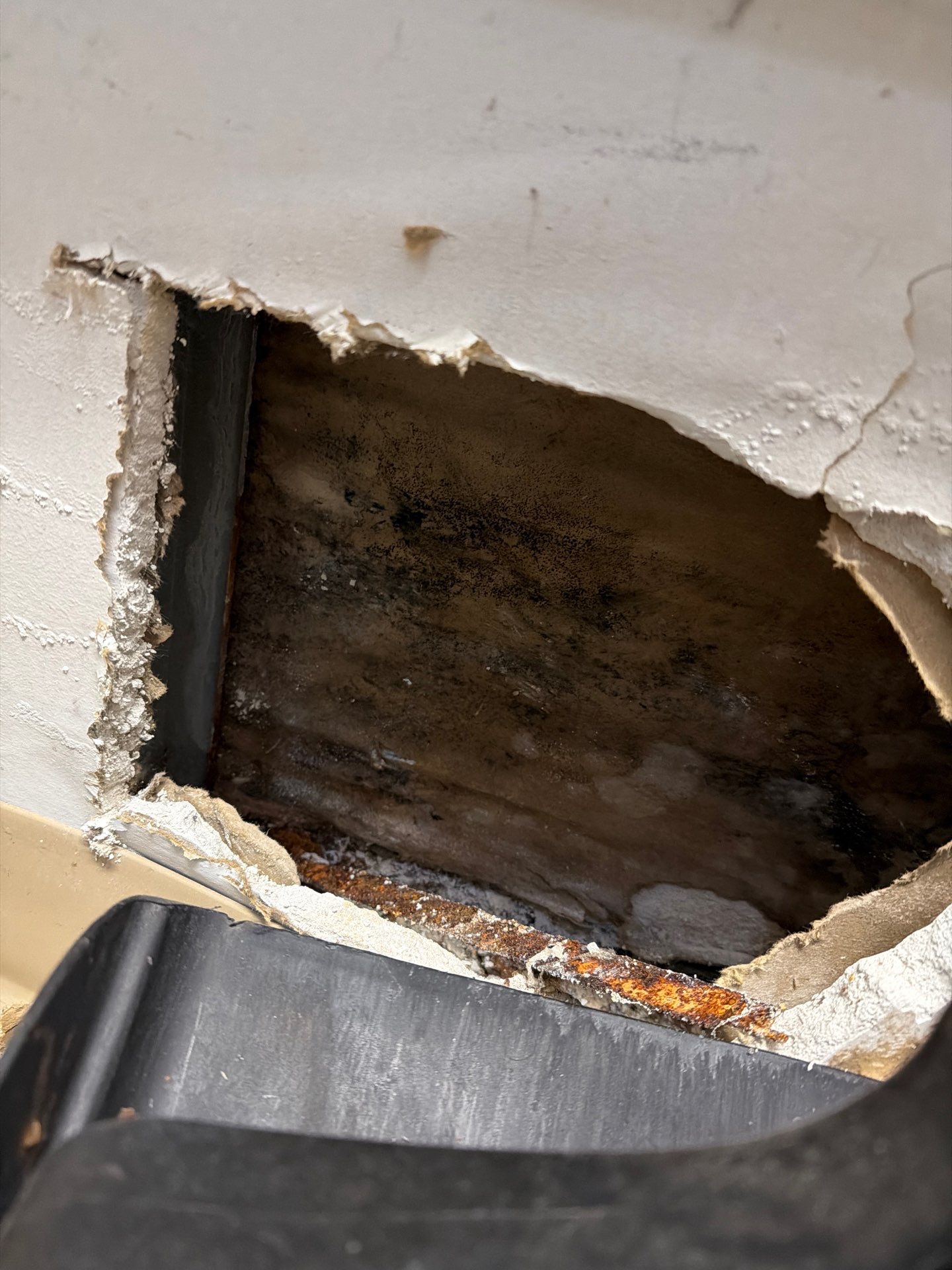
When our Cloverdale Water Restoration crew arrives at a Cloverdale property, the first thing we do is map the water with a moisture meter and a thermal camera. Water hides. It travels under laminate, wicks up drywall four to twelve inches above the floor line, and pools inside wall cavities where you cannot see it. Skipping this step is how homeowners end up with mold blooms three months later in spots they swore were dry. Once we know the boundary of the affected area, we extract standing water with truck-mounted or portable units, then set air movers and commercial dehumidifiers sized to the cubic footage of the space. A typical single-room frozen pipe loss in central Indiana needs three to five days of active drying, monitored daily with meter readings logged for your insurance file.
Drywall that has wicked water more than a few inches usually gets flood-cut, meaning we remove the lower two feet so the wall cavity can dry from the inside. Insulation that got wet has to come out, since fiberglass loses its R-value once compressed by water and cellulose turns into a mold substrate within forty-eight hours. Hardwood floors are the hardest call. Some can be saved with mat drying systems if we catch them within the first day, but cupped or buckled boards usually need replacement. Engineered flooring is even less forgiving because the plywood core delaminates once moisture works between the layers, and refinishing is not an option the way it is with solid hardwood. If your basement took the worst of it, our guide on basement flooding cleanup and restoration walks through how we handle finished lower levels specifically.
Pricing in Cloverdale for frozen pipe water damage runs a wide range because every loss is different, but most single-zone jobs land between 2,800 and 7,500 dollars for water mitigation alone, before any reconstruction. A whole-house event where water reached multiple floors can climb past 15,000 dollars once you factor in flooring replacement, drywall, paint, and trim. Homeowners insurance typically covers sudden and accidental pipe bursts, including the resulting water damage, though it generally will not pay to replace the pipe itself if the failure came from lack of heat in a vacant property. That distinction catches a lot of people, especially landlords and snowbirds. Reviewing your policy in October, before the first hard freeze, gives you time to ask your agent the right questions about service line coverage, water backup endorsements, and the actual dollar caps on interior finishes, because finding out your coverage was thinner than you assumed is a conversation nobody wants in the middle of a loss.
Preventing the Next One Before February Hits
Most Cloverdale frozen pipe failures happen in the same three places: pipes running through exterior walls, pipes in unheated crawl spaces, and pipes that feed outdoor spigots that were never disconnected for winter. Wrapping vulnerable lines with foam sleeves costs under fifty dollars at any hardware store and prevents the majority of preventable bursts. On nights when the forecast drops below ten degrees, let one faucet on an exterior wall drip slightly, since moving water resists freezing far better than still water. Open cabinet doors under kitchen and bathroom sinks on exterior walls so household heat can reach the pipes behind them. If you leave town for the holidays, never set the thermostat below 55 degrees, and ask a neighbor to walk through the house every other day.
Beyond the basics, a few longer-term upgrades pay for themselves the first time a cold snap arrives. Heat tape with a built-in thermostat is worth installing on any line that has frozen before, since pipes have memory and the same vulnerable run will freeze again under similar conditions. Sealing rim joists and air-sealing the gaps where plumbing penetrates exterior walls keeps cold air from washing directly over copper. A simple wifi-enabled water sensor placed near the water heater, under the kitchen sink, and behind a basement washing machine will text you the moment moisture appears, often hours before a slow leak becomes a flood. For a full overview of how we handle these emergencies start to finish, our water damage restoration service page covers response times, certifications, and the equipment we deploy on every job.